
Nana Patekar Dies at 75
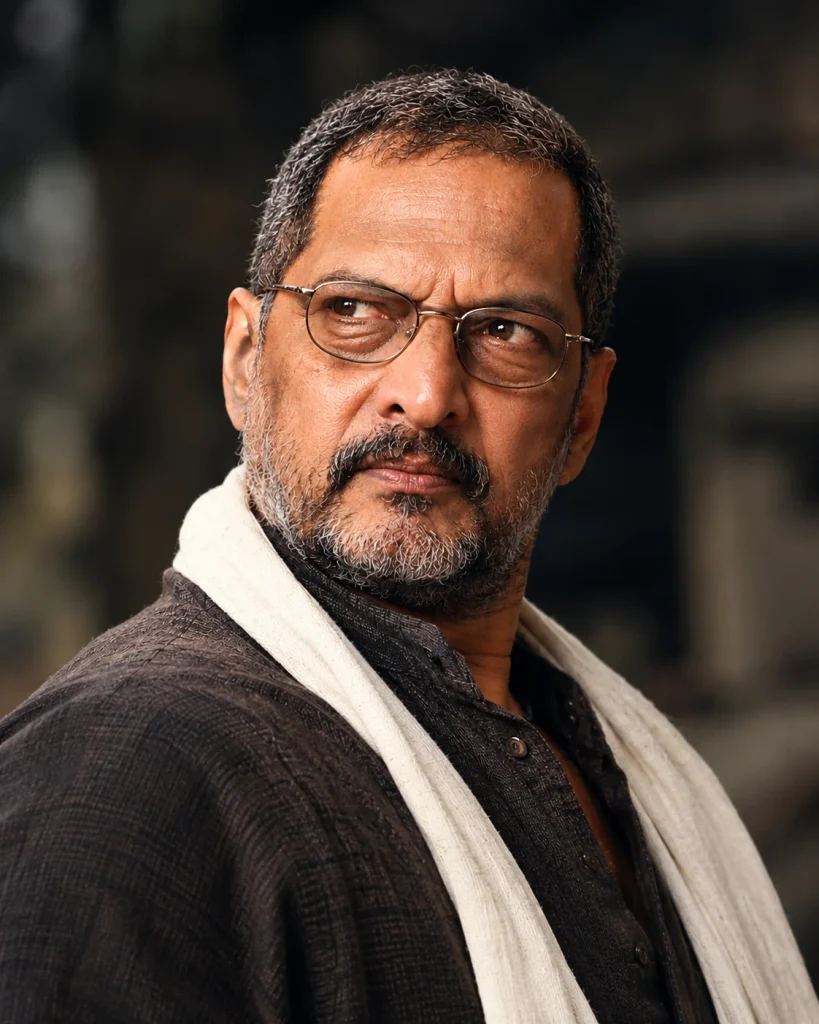
There are some actors you watch.
And then there are actors you feel.
Nana Patekar belonged to the second kind.
The veteran actor, whose gravelly voice, piercing eyes and extraordinary ability to portray anger, vulnerability and humanity made him one of the most recognisable performers in Indian cinema, has died at the age of 75 after suffering a severe cardiac arrest at his residence in Dona Paula, Goa.
He was rushed to a private hospital in the early hours of Thursday, where doctors attempted to revive him. Despite sustained efforts, he could not be saved and was declared dead at around 5:20 a.m.
With his passing, Hindi and Marathi cinema have lost not just a celebrated actor, but a performer who spent decades proving that you did not need conventional glamour to command an audience.
Sometimes, all you needed was a voice.
A look.
A pause.
And Nana Patekar had all three.
A Career That Never Needed the Word “Superstar”
Nana Patekar was never a conventional Bollywood hero.
He did not need elaborate song sequences, glamorous costumes or larger than life entrances.
His power came from somewhere else.
Performance.
Born Vishwanath Patekar in Maharashtra, he began his cinematic journey in the late 1970s and gradually built a reputation through theatre, Marathi cinema and Hindi films.
His rise was not overnight.
It was earned – character by character, scene by scene.
By the time audiences encountered him in films such as Parinda, Krantiveer, Agni Sakshi and Khamoshi: The Musical, Patekar had already developed a screen identity that was almost impossible to imitate.
He could make anger frightening.
He could make silence emotional.
And he could make a single sentence feel heavier than an entire monologue.
Parinda: The Performance That Changed Everything
For many film lovers, Parinda remains the moment Nana Patekar announced himself as an actor of extraordinary force.
His portrayal of a volatile gangster was frightening, unpredictable and deeply human.
There was cruelty in the character, but also pain.
There was violence, but also vulnerability.
Patekar refused to turn the character into a simple villain. Instead, he gave him layers, contradictions and psychological depth.
The performance earned him the National Film Award for Best Supporting Actor and established him among the country’s most respected performers.
It was the beginning of a remarkable run.
Krantiveer and the Power of Anger
Then came Krantiveer.
For an entire generation of moviegoers, the film became inseparable from Nana Patekar’s explosive performance.
His character was angry at corruption, injustice and a society that seemed to have forgotten its own people.
But Patekar’s greatest achievement was making that anger feel personal.
It wasn’t simply shouting.
It was frustration.
It was disappointment.
It was pain.
And underneath it all was a desperate desire for change.
The performance earned him the National Film Award for Best Actor and further cemented his position among India’s finest performers.
Three National Awards. One Extraordinary Career.
Nana Patekar went on to win three National Film Awards during his career.
He was recognised for:
- Parinda – Best Supporting Actor
- Krantiveer – Best Actor
- Agni Sakshi – Best Supporting Actor
But perhaps the most remarkable thing about these awards was the variety of performances behind them.
Patekar never belonged to just one genre.
He could be the hero.
The villain.
The troubled father.
The policeman.
The soldier.
The politician.
The comedian.
Or the broken old man trying to understand what remained of his life.
He could play almost anything.
And somehow, he always made it his own.
From Rage to Laughter: Enter Uday Shetty
Then came Welcome.
And audiences saw a completely different Nana Patekar.
As Uday Shetty, Patekar transformed himself into a comic gangster whose seriousness about his criminal empire became the source of endless humour.
His chemistry with Anil Kapoor’s Majnu Bhai became iconic.
The man who had once terrified audiences in intense crime dramas was now making millions laugh.
It was another reminder of his range.
Nana Patekar could move from tragedy to comedy without losing his identity.
He didn’t merely perform comedy.
He understood timing.
He understood pauses.
He understood the absurdity of a character.
And he knew exactly when to let silence deliver the joke.
Natsamrat: When an Actor Looked Into His Own Mirror
Years later, Nana Patekar delivered one of his most emotionally devastating performances in the Marathi film Natsamrat.
He played a retired theatre actor confronting ageing, loneliness, family relationships and the painful realisation that applause eventually fades.
There was something deeply personal about the role.
Patekar himself had spent much of his life connected to theatre and performance.
Watching him portray a legendary stage actor struggling with the final chapters of his life felt almost like watching an artist confront his own mortality.
It was heartbreaking.
It was powerful.
And it reminded audiences that even after decades of success, Nana Patekar could still surprise them.
The Voice That Became a Character
Few actors have possessed a voice as instantly recognisable as Nana Patekar’s.
Rough.
Deep.
Intense.
Sometimes quiet.
Sometimes explosive.
His voice had texture.
It carried anger even when he was speaking softly.
It carried sadness without requiring tears.
And it could turn an ordinary line into something audiences remembered for years.
For generations of movie lovers, Nana Patekar’s voice was more than dialogue.
It was an identity.
More Than an Actor
Nana Patekar’s contribution to Indian cinema extended beyond acting.
He worked as a director and writer and remained closely connected to theatre.
His directorial venture Prahaar: The Final Attack reflected his fascination with military life, discipline and the emotional cost of violence.
He also became associated with humanitarian work, particularly initiatives connected with farmers and rural communities.
In 2013, he received the Padma Shri, recognising his contribution to Indian cinema and the arts.
Yet despite the awards, honours and decades of fame, Patekar never seemed particularly interested in behaving like a conventional celebrity.
That was part of his appeal.
He always appeared to belong to the craft first.
The fame came later.
A Star Who Never Needed Stardom
The word “star” often suggests glamour.
Nana Patekar represented something different.
He represented craft.
His performances were often uncomfortable.
Sometimes angry.
Sometimes tragic.
Sometimes unpredictable.
But they were rarely forgettable.
He had the unusual ability to make audiences look at difficult characters and still search for the human being underneath.
That is perhaps the greatest mark of a great actor.
Not making audiences admire a character.
Making them understand one.
The Industry Mourns
Following news of his death, tributes began pouring in from across the film industry and public life.
Actors, filmmakers and political leaders remembered Patekar as an extraordinary performer whose work influenced generations of Indian cinema.
Fans, meanwhile, returned to the films that made him famous.
Clips of his most memorable performances began circulating.
Old dialogues were remembered.
Scenes were replayed.
Characters were discussed.
Because when an actor of Nana Patekar’s stature dies, people do not simply remember the person.
They remember where they were when they first saw him.
They remember the dialogue.
The character.
The scene.
The emotion.
And for millions of Indians, that means remembering an important part of their own lives.
The End of an Era
Every generation of cinema has a few performers who become more than actors.
They become part of the cultural memory.
Nana Patekar was one of them.
He gave Indian cinema characters that were angry, broken, funny, frightening, compassionate and deeply human.
He played men who shouted.
Men who cried.
Men who fought.
Men who laughed.
And men who had nothing left to say.
Through them all, he left behind something much larger than a filmography.
He left behind a language of performance.
A way of acting that relied not on perfection, but on truth.
Nana Patekar Is Gone. His Characters Are Not.
At 75, Nana Patekar’s remarkable journey has come to an end.
But the characters remain.
The gangster of Parinda.
The revolutionary of Krantiveer.
The troubled figures of Agni Sakshi and Khamoshi.
The policeman of Ab Tak Chhappan.
The unforgettable Uday Shetty of Welcome.
The ageing theatre legend of Natsamrat.
Each one carries a fragment of the actor who created them.
And perhaps that is the greatest comfort cinema offers.
Actors leave.
Films remain.
Voices fade.
But performances can live forever.
Nana Patekar may no longer walk onto a film set.
He may no longer deliver that unmistakable dialogue.
He may no longer silence an audience with a single look.
But somewhere, on a television screen, a streaming service, an old DVD, a cinema archive or simply in someone’s memory, Nana Patekar is still performing.
Still angry.
Still laughing.
Still breaking hearts.
Still making us listen.
Indian cinema has lost one of its most powerful voices.
But that voice will not easily disappear.
Because some performances end when the credits roll.
Nana Patekar’s never did.
Source: The Indian Express

Nani’s Bloody Romeo Mullet Haircut: Trending Men’s Hairstyles in India.
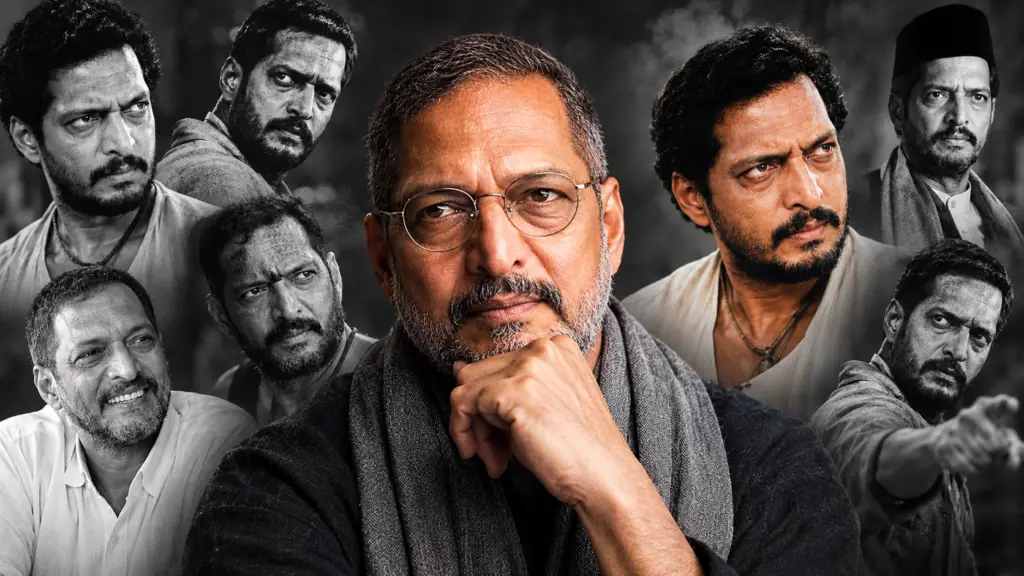
Nana Patekar Dies at 75: The Voice, Rage and Soul of Indian Cinema Falls Silent.

1 Kachori, 2 Samosa… In Mardon Ka Kya Bharosa. What Do Men Deserve Actually?

How to Stop Hair Fall in Men: 10 Practical Ways to Reduce Hair Loss and Support Hair Growth.

First Poster Unveils Ranbir Kapoor in Love & War: Ranbir Kapoor’s Rugged Air Force Look Sparks Massive Buzz.