Men with Vitiligo
For many men with vitiligo, the journey is more than skin deep. It often begins with small, unexpected patches that spark big questions: is vitiligo genetic, is vitiligo hereditary, or did something trigger it unexpectedly? Conversations quickly turn to fears like is vitiligo dangerous or hopeful searches asking is vitiligo curable.
From understanding vitiligo causes and vitiligo causes in men, to recognizing early vitiligo symptoms in men, the experience can feel isolating; whether it’s vitiligo around eyes, vitiligo around mouth, or more widespread changes. Across communities, both vitiligo in white men and vitiligo in black men carry unique social pressures, often deeply tied to identity and confidence. And while many search for answers about how to prevent vitiligo, the emotional impact; especially concerning vitiligo mental health, is just as real as the physical symptoms.
Underlying Causes: Men with Vitiligo
Vitiligo develops when melanocytes, the cells responsible for producing melanin, are damaged or destroyed. Melanin determines the color of the skin, hair, and eyes. When melanocytes stop functioning in certain areas, those regions lose pigment and appear white or significantly lighter than surrounding skin.
The most widely accepted cause of vitiligo is autoimmune dysfunction. In autoimmune conditions, the body’s immune system mistakenly attacks its own healthy tissues. In vitiligo, immune cells target melanocytes, gradually eliminating pigment in affected areas. However, the process is complex and rarely triggered by a single factor. Genetics, environmental stressors, oxidative damage, and neurological influences may all contribute to the development of the condition.
Men who have a family history of autoimmune disorders such as thyroid disease, type 1 diabetes, or rheumatoid arthritis may have an increased risk. That said, many men diagnosed with vitiligo report no known family history. Genetics increase susceptibility, but they do not guarantee onset.
Environmental and lifestyle factors may also play a role. Chronic psychological stress, repeated skin trauma, chemical exposure in industrial workplaces, and severe sunburns have all been associated with triggering or worsening vitiligo. Men working in physically demanding occupations or high-pressure environments may unknowingly create conditions that exacerbate immune imbalance. Repeated shaving irritation, friction from athletic equipment, or tight clothing can trigger depigmentation in susceptible individuals through a mechanism known as the Koebner phenomenon, in which skin injury leads to the formation of new vitiligo patches.
It is essential to clarify that vitiligo is not caused by infection, poor hygiene, or dietary deficiency alone. It is not contagious, and it cannot be transmitted through touch or proximity.
Vitiligo in White Men

In white men or those with lighter skin tones, vitiligo can initially be subtle. Because fair skin already contains lower levels of melanin, early depigmented patches may not stand out dramatically. The condition may go unnoticed until the surrounding skin darkens through sun exposure, creating contrast between normal and depigmented areas.
Many white men first detect vitiligo after tanning, when white patches remain unaffected by sunlight while the surrounding skin becomes darker. At this stage, the difference becomes more visible, often leading to medical consultation. In its early stages, vitiligo in lighter skin tones may be mistaken for scars, mild fungal infections, or uneven sun exposure.
Although the visual contrast may be less intense than in darker skin tones, the psychological response can still be significant. Facial involvement, particularly around the eyes or mouth, may feel highly noticeable to the individual, even if others do not perceive it as dramatically. Some men experience frustration with uneven tanning patterns, particularly if they are accustomed to outdoor activities.
Vitiligo in Black Men
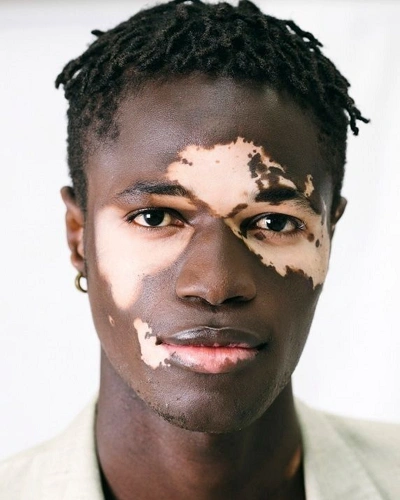
In Black men and men with darker skin tones, vitiligo typically presents with strong contrast. Depigmented patches often appear bright white against richly pigmented surrounding skin. Because of this sharp visual difference, the condition may be noticed earlier and may draw more attention socially.
The high contrast can amplify emotional impact. In communities where skin tone carries cultural and social significance, vitiligo may be misunderstood. Historically, misinformation has led to stigma or false assumptions about contagion. Public understanding improved significantly after global attention was drawn to vitiligo by public figures such as Michael Jackson, who publicly disclosed his diagnosis and brought awareness to the condition worldwide.
In darker skin tones, facial vitiligo can be especially noticeable, which may intensify self-consciousness. However, increased representation in media and growing dermatological awareness have improved public education in recent years. Today, many Black men with vitiligo advocate openly, challenging stigma and redefining visible difference as part of individual identity.
Understanding Body Area: Men with Vitiligo
1. Men with Vitiligo Around Mouth

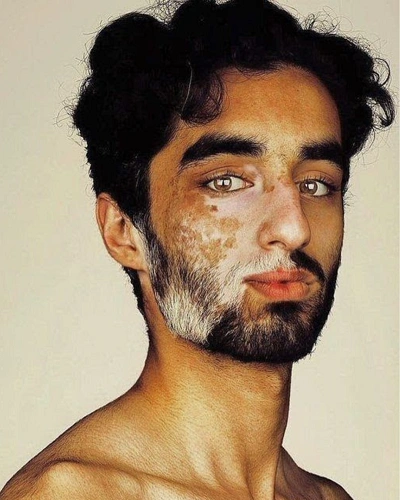
Vitiligo around the mouth, medically referred to as perioral vitiligo, is one of the most noticeable facial patterns in men. Because the mouth plays a central role in communication, facial expression, and social interaction, depigmentation in this region often feels highly visible and emotionally significant.
Shaving, frequent movement of the lips, sun exposure, and friction may all contribute to triggering pigment loss in genetically susceptible men. The condition may begin as a small pale patch near the lip line and gradually expand outward.
Cause: Autoimmune pigment cell destruction
Symptoms: White lip-border patches
Treatment Approach: Topical immunomodulator therapy
Care Strategy: Gentle shaving routine
Psychological Impact: Increased facial self-awareness
Men with perioral vitiligo often worry about how the contrast affects their smile or speech presentation. However, facial areas frequently respond better to treatment compared to extremities. Early dermatological consultation improves repigmentation outcomes.
2. Men with Vitiligo on the Hands
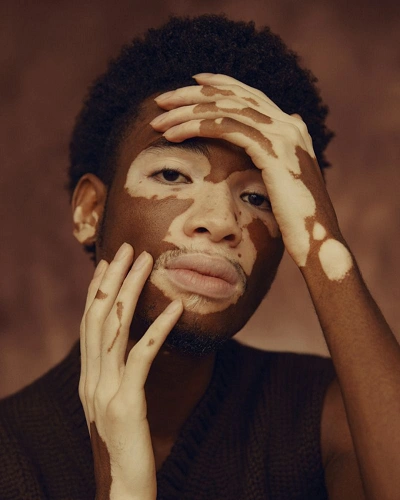

The hands are among the most commonly affected areas in men. Because hands are constantly exposed to sunlight, environmental chemicals, and physical contact, they are particularly vulnerable to both autoimmune triggers and trauma-induced depigmentation.
Men who work in manual labor, athletics, or chemical environments may notice vitiligo developing on knuckles, fingers, or wrists. The hands are socially visible during greetings, professional interactions, and everyday gestures, which may heighten self-consciousness.
Cause: Repeated friction and autoimmunity
Symptoms: Symmetrical finger depigmentation
Treatment Approach: Narrowband UVB therapy
Care Strategy: Protective glove usage
Psychological Impact: Social interaction discomfort
Repigmentation on the hands can be more challenging because melanocyte reservoirs are fewer in these areas. Consistent sun protection and trauma avoidance are essential to prevent expansion.
3. Men with Vitiligo on the Feet
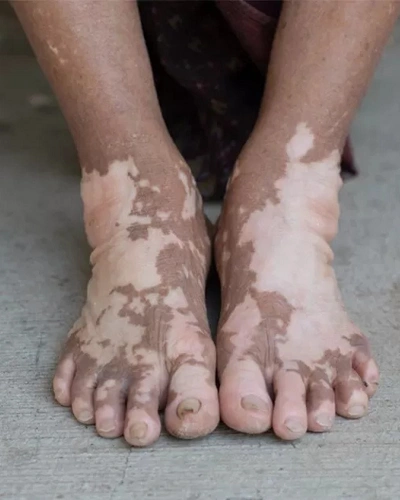
Vitiligo on the feet often appears on the toes, ankles, or soles. Tight footwear, athletic friction, and pressure points may contribute to onset through the Koebner phenomenon, in which skin injury triggers new depigmented patches.
Although feet are less visible in professional settings, they become more noticeable in gyms, beaches, or swimming environments. Some men discover foot involvement only after patches have expanded significantly.
Cause: Pressure induced skin trauma
Symptoms: Ankle and toe patches
Treatment Approach: Targeted light therapy
Care Strategy: Proper footwear support
Psychological Impact: Beach or gym anxiety
Treatment response on the feet may be slower than on the face. Minimizing repetitive trauma and ensuring proper shoe fit can reduce additional pigment loss.
4. Men with Vitiligo on the Neck
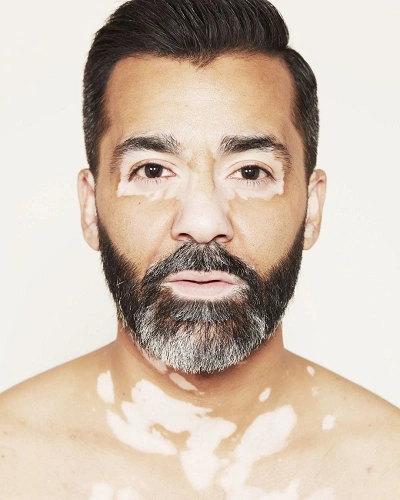

The neck is highly exposed to sunlight and grooming friction, especially in men who shave regularly or wear collared shirts. Vitiligo may extend from facial patches downward or appear independently along the sides or back of the neck.
Because the neck is visible in both casual and formal attire, depigmentation here may feel difficult to conceal. Sun-induced contrast often makes patches more prominent.
Cause: Sun exposure and autoimmunity
Symptoms: Irregular cervical depigmentation
Treatment Approach: Topical corticosteroid application
Care Strategy: Daily sunscreen protection
Psychological Impact: Professional appearance concerns
Facial and neck regions often respond more favorably to treatment than extremities. Early intervention can improve stabilization and cosmetic blending.
5. Men with Vitiligo on the Scalp
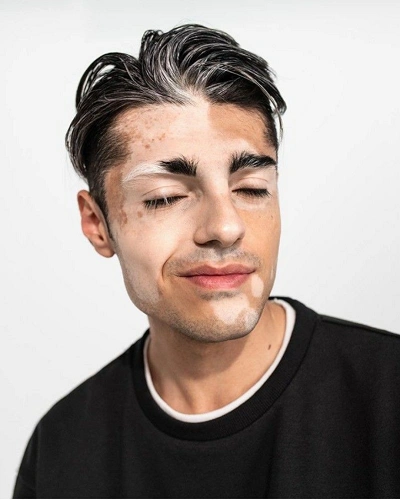
Scalp vitiligo may be less immediately visible unless accompanied by hair depigmentation. When melanocytes within hair follicles are affected, hair growing from those areas may turn white, a condition known as leukotrichia.
Men may initially interpret localized white hair patches as premature graying rather than vitiligo. However, sharply defined areas of white hair often indicate underlying pigment loss in the scalp.
Cause: Follicular melanocyte destruction
Symptoms: Localized white hair patches
Treatment Approach: Early light-based therapy
Care Strategy: Scalp sun protection
Psychological Impact: Altered hair identity perception
Because hair follicles contain melanocyte reservoirs, early treatment offers better chances of repigmentation. Men with shorter hairstyles may notice contrast more readily.
6. Men with Vitiligo in the Beard Area

Vitiligo in the beard area can significantly affect facial appearance because it involves both skin and hair pigmentation. In many men, depigmented patches develop beneath facial hair, and over time, beard hairs within those patches may turn white. This whitening of hair, known medically as leukotrichia, indicates that melanocytes within hair follicles have been affected.
Shaving irritation, friction, and autoimmune activity all contribute to beard-area involvement. Because the beard plays a strong role in masculine identity for many men, visible changes can feel emotionally impactful.
Cause: Autoimmune follicular melanocyte loss
Symptoms: White beard hair patches
Treatment Approach: Early targeted light therapy
Care Strategy: Low irritation grooming methods
Psychological Impact: Altered masculine self image
Treatment response can vary. Areas with white hair may respond more slowly because pigment-producing cells in follicles are depleted. Some men choose to grow a full beard to blend contrast, while others shave for uniformity. Grooming becomes a personal and strategic decision.
7. Men with Vitiligo on the Chest
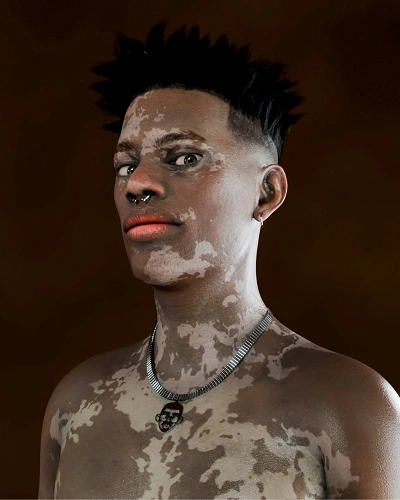
Vitiligo on the chest often appears as symmetrical patches across the upper torso. In some men, depigmentation begins near the sternum and expands outward. Because the chest is usually covered in daily life, the condition may go unnoticed until it becomes extensive.
For men engaged in fitness culture, bodybuilding, or athletics, chest vitiligo may affect body image. Contrast becomes especially visible after sun exposure or tanning, as surrounding skin darkens while depigmented areas remain white.
Cause: Systemic autoimmune progression
Symptoms: Symmetrical upper torso patches
Treatment Approach: Combination topical therapy
Care Strategy: Consistent sun avoidance
Psychological Impact: Shirtless confidence concerns
Although chest patches may not interfere with physical function, they can influence comfort in situations involving swimming, intimacy, or gym environments.
8. Men with Vitiligo on the Back
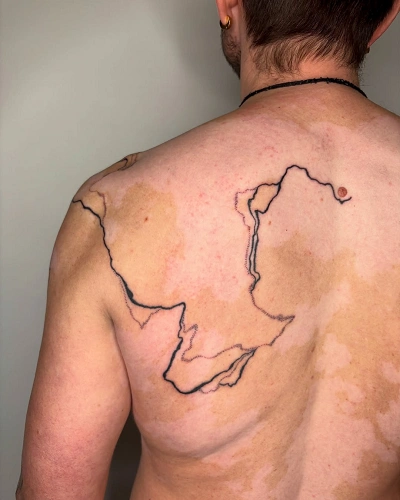
The back is a common but less immediately visible location. Many men discover back involvement only after a partner or family member points it out. Depigmentation may appear across the shoulder blades, lower back, or along the spine.
Because the back is frequently exposed to sunlight during outdoor activities, sunburn risk is elevated in depigmented areas. Repeated sun damage can increase contrast and potentially worsen spread in susceptible individuals.
Cause: Autoimmune pigment cell damage
Symptoms: Large dorsal depigmented areas
Treatment Approach: Phototherapy-based repigmentation
Care Strategy: Full-back sunscreen application
Psychological Impact: Limited visual self-monitoring
Back vitiligo may expand gradually without immediate awareness. Regular dermatological checkups help monitor progression in areas not easily self-observed.
9. Men with Vitiligo in the Genital Area
Genital vitiligo is medically common but rarely discussed openly. Depigmentation may affect the penis, scrotum, or surrounding groin region. Because this area contains sensitive skin, the condition may cause heightened anxiety despite having no impact on physical function.
It is important to clarify that genital vitiligo does not affect sexual performance, fertility, libido, or hormone levels. The condition is purely pigment-related. However, emotional discomfort in intimate relationships can arise if communication is lacking.
Cause: Localized autoimmune depigmentation
Symptoms: Penile or scrotal whitening
Treatment Approach: Gentle topical immunotherapy
Care Strategy: Avoid friction irritation
Psychological Impact: Intimacy-related self-consciousness
Dermatologists approach genital vitiligo with sensitivity and confidentiality. Treatment in this region must be carefully supervised due to delicate skin.
10. Men with Vitiligo Around the Ears
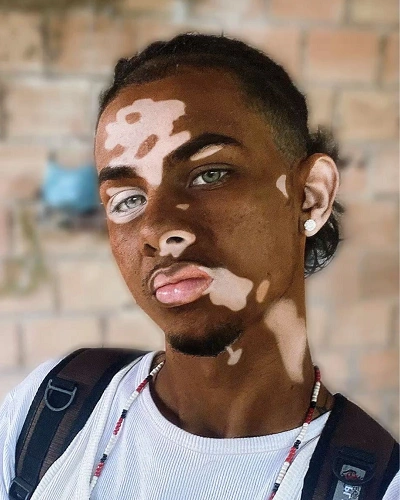
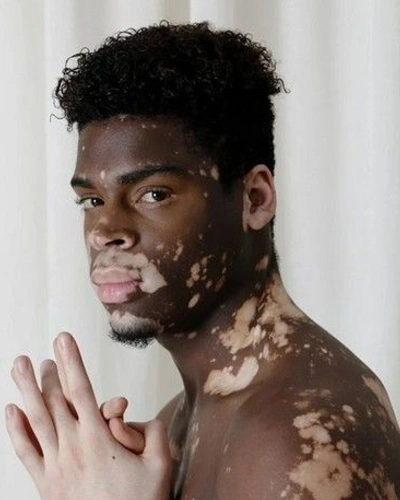
Vitiligo around the ears often develops near the hairline, behind the ears, or along the outer ear structure. Because ears receive frequent sun exposure, contrast may increase over time.
Men with short hairstyles may notice ear depigmentation more prominently. In some cases, the condition extends from scalp or facial involvement into this region.
Cause: Sun exposure plus autoimmunity
Symptoms: Periauricular white skin patches
Treatment Approach: Targeted topical corticosteroids
Care Strategy: Ear-area sun protection
Psychological Impact: Visible profile contrast awareness
Although ear involvement is usually medically harmless, it can affect side-profile appearance, particularly in professional or social settings.
Men with Vitiligo: Medical Treatment and Care
There is currently no universal cure for vitiligo, but several treatment options can encourage repigmentation or stabilize progression. Topical corticosteroids and calcineurin inhibitors are commonly prescribed in early stages. Narrowband ultraviolet B therapy has demonstrated effectiveness, particularly for facial areas. More recently, targeted treatments such as topical Janus kinase inhibitors have shown promising results in certain cases.
In stable vitiligo that has not spread for an extended period, surgical options such as melanocyte transplantation may be considered. For men with extensive depigmentation covering most of the body, some choose depigmentation therapy to achieve a uniform appearance.
Sun protection is critical in all cases. Depigmented skin lacks melanin’s protective barrier and burns more easily. Daily sunscreen use reduces damage and prevents additional contrast caused by tanning of surrounding skin.
Stress management also plays an important role in long-term care. Regular exercise, adequate sleep, and structured routines can support immune balance. While no specific diet cures vitiligo, maintaining overall metabolic health may reduce systemic inflammation.
Long Term Outlook for Men with Vitiligo
Vitiligo is unpredictable. Some men experience limited patches that remain stable for decades. Others encounter gradual expansion. The condition does not shorten lifespan, impair fertility, or diminish physical capability. It changes pigmentation, but it does not alter strength, intelligence, or masculinity.
Over time, many men report a shift in perspective. What once felt like a flaw becomes simply a defining physical characteristic. Acceptance does not necessarily mean abandoning treatment; it means separating self-worth from skin color variation.
Vitiligo in men is a medical condition with biological roots, racial variations in presentation, and deeply personal emotional dimensions. With informed care, appropriate medical guidance, stress management, and psychological resilience, men with vitiligo can live confidently and fully. The condition alters pigment, but it does not define character, potential, or identity.
Final Thoughts
Ultimately, the story of men with vitiligo is one of resilience, adaptation, and redefining confidence. While questions like is vitiligo dangerous, is vitiligo curable, and is vitiligo genetic continue to shape conversations, awareness and understanding are steadily replacing stigma. By educating ourselves about vitiligo causes, recognizing vitiligo symptoms in men, and openly discussing vitiligo mental health, we create space for acceptance and support.
Whether addressing concerns about is vitiligo hereditary, exploring how to prevent vitiligo, or simply acknowledging the realities of vitiligo around eyes and vitiligo around mouth, the goal is not just treatment; but empowerment. Because for all men with vitiligo, confidence isn’t defined by skin tone, but by owning their story unapologetically.
FAQs: Men with Vitiligo
1. Is vitiligo 100% curable?
No, vitiligo is not 100% curable at this time. It is a chronic autoimmune condition. However, many men with vitiligo respond well to treatments such as topical medications and light therapy, which can help restore pigment in certain areas and slow progression. With proper care, men with vitiligo can successfully manage the condition long term.
2. How does vitiligo start in men?
In men with vitiligo, the condition usually begins as a small white or lighter patch of skin that gradually becomes more visible. It commonly appears on the face, hands, neck, or around the mouth. Some men with vitiligo notice the first patch after stress, sunburn, or repeated skin irritation.
3. Can vitiligo be itchy?
Vitiligo is generally not itchy or painful. Most men with vitiligo experience no discomfort in affected areas. However, a few men with vitiligo may report mild tingling or slight itching before a new patch develops, especially during active stages.
4. What is stage 1 of vitiligo?
Stage 1 in men with vitiligo refers to the early phase when a small depigmented patch appears with minimal or no spreading. At this stage, hair in the area usually keeps its normal color. Early diagnosis and treatment can improve outcomes for men with vitiligo.
5. Can I stop vitiligo from spreading?
There is no guaranteed way to completely stop vitiligo from spreading. However, men with vitiligo may reduce the risk of progression through early treatment, daily sun protection, avoiding skin trauma, and managing stress. Many men with vitiligo experience stable periods where the condition does not worsen.
What’s Trending!
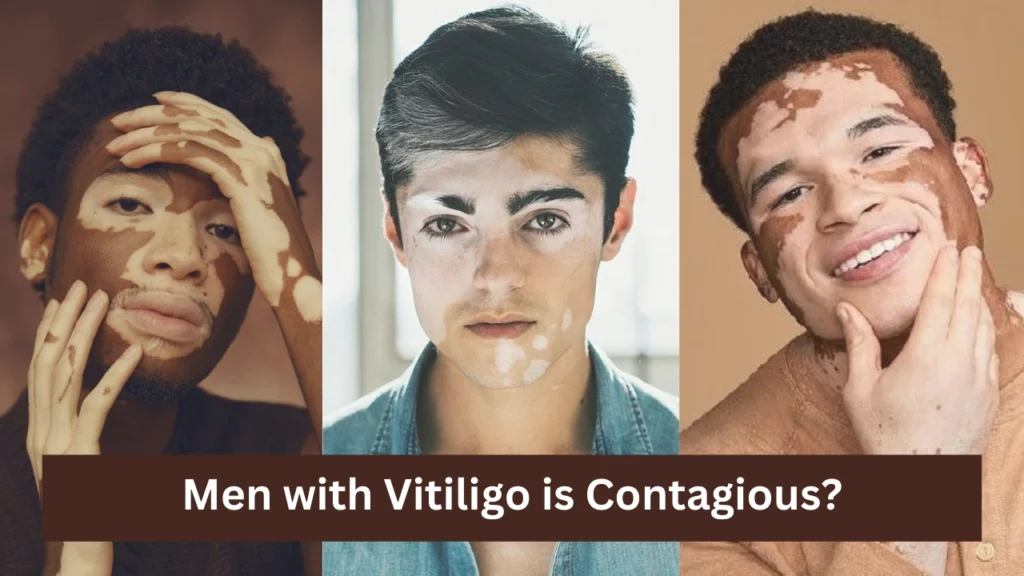
Men with Vitiligo: Causes, Symptoms, Treatment & 10 Common Body Areas Explained.
Microneedling and Spicule Technology: Guide to Youthful, Radiant Skin in 2026.
Blackheads and Whiteheads in Men: Simple Steps to Clear Skin in 2025.
5 Hyperpigmentation in Men: Best Effective Home Remedies and Skincare Products.
90 Days to Glass Skin for Men: Snail Mucin Routine for a Healthy Glow.