Nikhil Kamath and Elon Musk Podcast
In the world of business, technology, and digital media, very few collaborations create a seismic buzz; the kind that transcends borders, industries, and cultural divides. But the highly awaited Nikhil Kamath and Elon Musk podcast has done exactly that. The surprising crossover between India’s youngest self made billionaire and the world’s most influential tech visionary has become one of the most trending global conversations of the year.
What started as a short monochrome teaser clip uploaded by Nikhil Kamath quickly spiraled into a viral phenomenon. Millions debated whether the clip was real or AI generated, fans flooded social media with reactions, and experts began predicting the potential impact of such a conversation. When the full episode dropped, it not only validated the hype; it surpassed expectations.
This article dives deep into everything you need to know about the Nikhil Kamath x Elon Musk podcast: the highlights, controversies, predictions, insights, and why this exchange matters so much to India and the world.
Background: How Did We Get Here?
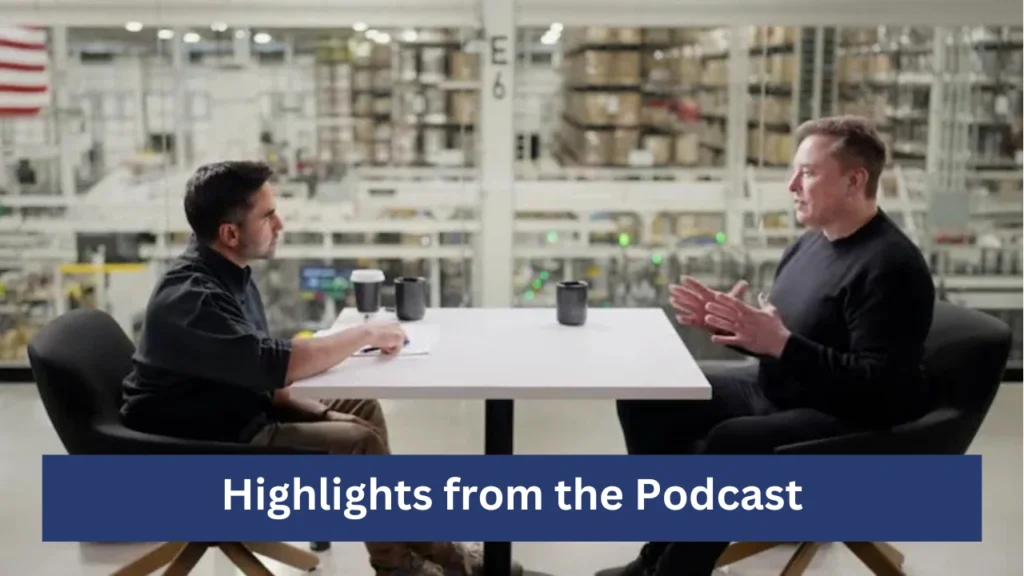
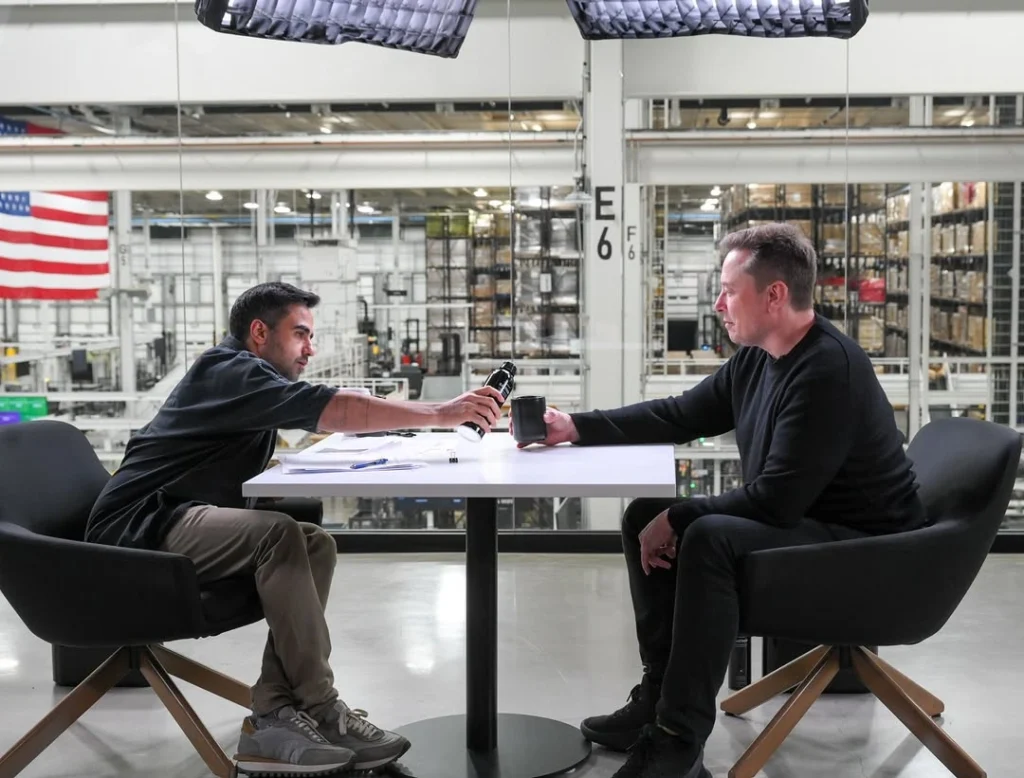
On November 28, 2025, Nikhil Kamath, the co founder of India’s retail broking giant Zerodha, sent the internet into a frenzy when he posted a short black and white teaser on X (formerly Twitter). The clip showed Nikhil Kamath sitting across a table from Elon Musk, casually sipping coffee with the kind of ease that instantly captured global attention. Kamath captioned it simply: “Caption this @elonmusk.” That single post, pairing Nikhil Kamath with Elon Musk in an unexpected, cinematic setting; went viral within minutes.
The teaser’s aesthetic; minimalist, monochrome, and highly polished; led fans of both Nikhil Kamath and Elon Musk to speculate about the nature of this meeting. While many were excited, others questioned its authenticity. Some viewers wondered if the clip featuring Elon Musk and Nikhil Kamath was AI generated, given how realistic deepfake technology has become. The speculation escalated when the in house AI chatbot on Musk’s own platform commented that the video “appears to be AI generated,” pointing to “unnatural face morphing … a common trait in deepfake or AI edited content.”
However, the confusion didn’t last long. Within days, multiple media outlets confirmed that the Nikhil Kamath and Elon Musk podcast was indeed real. The conversation was part of Kamath’s podcast series, People by WTF (also referenced as “WTF is?”). Reports revealed that the full Nikhil Kamath–Elon Musk episode would soon be released, with early access available for premium subscribers.
This combination of mystery, star power, and unexpected collaboration; Nikhil Kamath, one of India’s leading entrepreneurs, and Elon Musk, one of the world’s most influential tech visionaries; created the perfect storm. Anticipation skyrocketed, debates intensified, and millions waited eagerly for the full episode long before it even premiered.
What Was Said: Key Highlights from the Podcast
Since the full episode went live, several major statements or revelations; from Musk have grabbed headlines. Here’s a breakdown of the most talked about takeaways from the conversation between Kamath and Musk.
– On immigration and the US India talent link
- Musk stated that the United States has “benefitted immensely” from hiring talented Indians over the years. He emphasized that skilled immigration has historically added significant value to US innovation and industry.
- On the contentious topic of the H 1B visa program, Musk criticized its misuse by outsourcing firms, calling out what he described as gaming of the system but he opposed a complete shutdown. Instead, he advocated for reforms and proper regulation.
– On the future of work, AI, and robotics
- One of the most striking predictions of the podcast: Musk said that “working could soon become optional.” According to him, advances in AI and robotics might allow machines to produce most goods and services, rendering traditional 9 to 5 jobs far less necessary; perhaps even obsolete within the next 10–20 years.
- Further, he suggested that as technology evolves, money; at least as we understand it today; and work might “become optional,” changing the very foundation of our economic and social frameworks.
– On personal and cultural connections
- In a more personal turn, Musk shared that his partner (Shivon Zilis) is “half Indian,” and disclosed that one of their sons carries the middle name “Sekhar” a tribute to the Indian American physicist Subrahmanyan Chandrasekhar. The revelation stirred conversations about cross cultural ties and the global Indian diaspora’s influence.
– On entrepreneurship & message for Indian youth
- Musk addressed Indian entrepreneurs and youth, urging them to “be net contributors to society,” urging them to focus on long term value creation rather than get rich quick fame. He touched on investment philosophy, technology, and the importance of persistence. mint+1
These are not just “sound byte” moments; combined, they paint a portrait of a conversation that spans immigration policy, global talent flow, disruptive technology, cultural identity, and the future of work.
Why It’s Trending: Public Reaction & Social Media Buzz?
Credit:@nikhil.kamath
The podcast episode has triggered enormous reactions; a combination of admiration, skepticism, worry, and debate. Some of the factors fueling the trend:
- Unprecedented crossover: It’s rare to see a leading Indian financial tech entrepreneur; deeply rooted in Indian markets; sit down with one of the world’s richest, most influential tech magnates. The juxtaposition of Kamath’s India centric business empire and Musk’s global, futuristic ventures gives the conversation global relevance. Many commentators described the pairing as “billionaire meets (potential) world dominator of tech,” or “India meets Mars guy.”
- Speculation about authenticity: Before release, doubts over AI generation or deepfake surfaced widely. Some viewers including tech savvy individuals; noted “unnatural blending around faces” or “too polished” visuals.
- High stakes statements: Musk’s predictions about work being optional, his commentary on immigration and H-1B, and the cultural revelation about his family; these are not trivial topics. They strike chords across industries, national policies, social debates, and personal identity.
- Global timing & resonance: As AI, automation, and globalization dominate headlines worldwide; particularly worries about job displacement and immigration; the podcast taps directly into those global anxieties and hopes.
Consequently, the podcast has become more than “just another interview.” It’s being treated as a cultural moment, a cross border dialogue, a thought experiment; and a lightning rod for debate.
What It Means: Implications Across Domains?
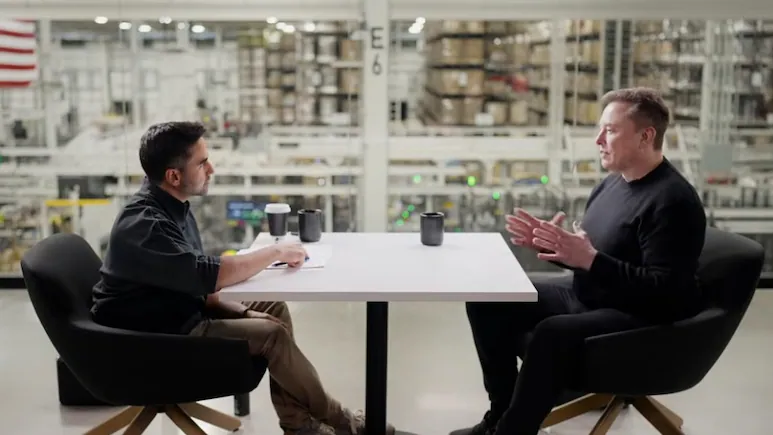
Let’s break down what the conversation could influence; not just in headlines, but in real world impact.
1. Talent mobility, immigration & policy
Musk’s endorsement of Indian talent; plus public acknowledgement of the benefits of immigration; could influence global perceptions, especially in countries debating immigration policy. His stance on H-1B visa misuse but support for the program signals a nuanced take: retain skilled migration, but regulate better. For Indian professionals and diaspora; this could be a morale boost, and may inform lobbying or policy discussions in global tech hubs.
2. The future of labor, work, and economy
If we take Musk’s prediction seriously; that AI & robotics might make traditional work optional; that raises existential questions for economies, labor markets, social security, and even identity. What does work mean if robots do it all? How would societies restructure? Income distribution, universal basic income, taxation, consumption; all could change. For India, a youthful nation with a massive workforce, the ripple effects could be profound.
3. Entrepreneurship & investment mindset
Musk’s message to Indian entrepreneurs; to be “net contributors,” to focus on long term impact; could encourage a shift in mindset away from quick profits and hype. It reinforces the idea that innovation, resilience, and ethical contribution matter. Given Kamath’s network and influence (especially in the Indian startup, investor community), the podcast might inspire a new wave of value driven entrepreneurship.
4. Cultural identity & global belonging
Musk acknowledging his partner’s half Indian heritage, naming his son after an Indian American scientist; that’s symbolic. It underscores how talent, legacy, and identity now transcend borders. For many Indians and Indian Americans, it’s a nod of recognition from an influential global personality; potentially strengthening diaspora pride, cross cultural connections, and soft power narratives.
5. Media, storytelling, and global podcasting
This podcast may mark a turning point: mainstream Indian entrepreneurs entering global conversations, building media presence, and connecting with international audiences. If successful, it could inspire more cross border conversations, collaborations, and media ventures; changing how Indian business and tech leaders engage with the world.
But It’s Not All Smooth: Critiques, Doubts & What Remains Uncertain
While the episode has generated hype, not everyone is convinced. There are legitimate critiques and unresolved questions, including:
- Authenticity scepticism still lingers: Some continue to doubt whether the teaser was real; concerns about AI generation or editing remain. Given the power of deepfakes, many internet users remain wary of accepting the visuals at face value.
- Idealism vs. Reality on AI / Robotics: Musk’s prediction that work may become optional is bold; but many critics argue that technological adoption, economic realities, social inertia, and inequality make such a scenario unlikely to play out uniformly across countries. For a developing economy like India, the transition could be messy.
- Ethical and political questions about immigration: While the pro immigration stance might resonate with some, others argue that unregulated migration can lead to social and economic friction, especially in nations protective of their own workforce. Musk’s comments; though nuanced, may prompt debates on equity, brain drain, and global inequality.
- Commercialization & monetization of influence: The fact that early access to the podcast was being sold (reports mention pre screening access for a fee) raises questions: is this conversation about ideas & global discourse or part of media commercial strategy, hype building, monetizing attention? Some critics see this as turning high profile conversations into content commodities.
- Sustainability: Is this a one off or a pattern shift?: This podcast is huge; but will it lead to more global crossovers, or is it a clever one time PR play? The long term significance depends on whether such dialogues become frequent, and whether they drive real action (in policy, investment, tech, etc.).
Wider Significance: Why This Matters for India and the World?
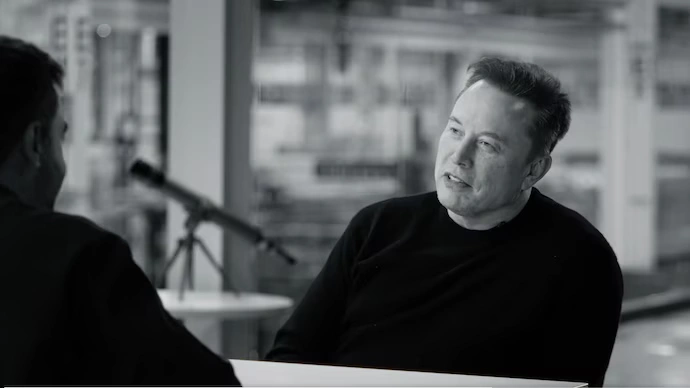
This podcast isn’t just about two wealthy individuals chatting. Its importance lies in what it symbolizes; and what it might catalyze.
- For India’s youth, entrepreneurs and professionals, the conversation underscores a global trajectory: Indian talent is globally valuable, capable of shaping not just markets, but industries, culture, and technology.
- For global tech and policy, it draws attention to migration, talent flow, automation, and the need to rethink economic models as AI reshapes labor.
- For media and storytelling, it demonstrates the power of cross cultural, cross border dialogues; the appeal of mixing east and west, finance and tech, heritage and ambition.
- For identity, diaspora and global communities, it’s a small yet symbolic step toward deeper integration, recognition, and cross pollination of ideas; be it science, business, culture or values.
In short: this episode is a cultural moment. A digital age conversation that risks; intentionally or not, shifting how we think about talent, borders, work, and identity.
What to Watch Next: What Will the Fallout Be?
Here are a few things to keep an eye on, now that the podcast is out and the dust is still settling:
Final Thoughts
The podcast between Nikhil Kamath and Elon Musk isn’t just another celebrity chat or business interview. It is; in many ways, a harbinger of the future: where geography matters less, talent flows globally, technology reshapes livelihoods, and identity transcends borders.
Whether you consider this a media stunt, a courageous cross border dialogue, or a visionary conversation; it’s clear that the ripples are already spreading. For India, for global tech, for the future of work, and for anyone who dares to imagine a world beyond traditional boundaries; this episode arrives at the right time.
Whether we lean into optimism; of global collaboration, talent mobility, rapid innovation; or caution, about automation, inequality, cultural tensions; the discussion has begun. And in a rapidly changing world, perhaps that’s the most important thing of all.
Source: The Times of India, Mint, Financial Express
What’s Trending!

Nani’s Bloody Romeo Mullet Haircut: Trending Men’s Hairstyles in India.
Nana Patekar Dies at 75: The Voice, Rage and Soul of Indian Cinema Falls Silent.

1 Kachori, 2 Samosa… In Mardon Ka Kya Bharosa. What Do Men Deserve Actually?

First Poster Unveils Ranbir Kapoor in Love & War: Ranbir Kapoor’s Rugged Air Force Look Sparks Massive Buzz.

From Australia to India: Ryan Williams Shines on India Debut: Meet the New No.10 Star.