In today’s hyper-digital, trend-chasing world, men’s grooming has become faster, louder, and often disposable. Haircuts are optimized for social media, designed to peak for a few weeks before being replaced by the next viral style. Yet quietly; and powerfully, a counter-movement is unfolding. One rooted in patience, precision, and heritage. One that looks backward to move forward.
Across Japan, 1930s barbering is experiencing a profound renaissance, bringing with it a renewed appreciation for timeless masculinity, refined aesthetics, and the lost art of classic grooming. For men searching for vintage vibe haircuts; styles that carry weight, elegance, and identity, this revival is more than a trend. It’s a philosophy.
1930s: When Men’s Hair Meant Something
The 1930s weren’t just another decade for men’s grooming; they were a defining era. This was a time when appearance reflected character, discipline, and social presence. Men dressed with intention, moved with confidence, and treated grooming as a non-negotiable part of daily life.
Credit:@ mr_classic_0314
Haircuts during this period were never accidental. Every detail was considered:
- The direction of hair growth
- The balance between structure and softness
- The harmony between haircut, clothing, and posture
Barbers weren’t simply cutting hair; they were shaping identity. A well-groomed man was seen as reliable, respectable, and composed. This cultural mindset laid the foundation for some of the most iconic men’s hairstyles ever created. Fast-forward to today, and those same values are resurfacing; especially in Japan.
Also Read: 1980s Mens Hair Fashion
Japan’s Unique Relationship With Tradition
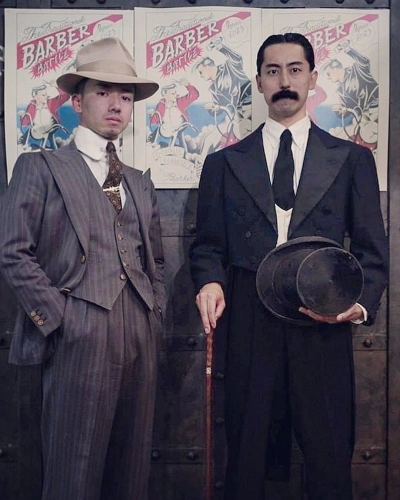
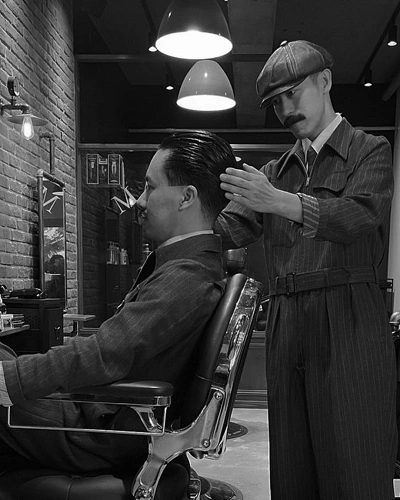
Japan has always had a rare ability to preserve the past while innovating for the future. From centuries-old tea ceremonies to meticulous craftsmanship in modern industries, respect for tradition is deeply ingrained in Japanese culture.
Barbering is no exception.
Long before Western vintage styles returned to global popularity, Japanese barbers were already studying them. Old photographs, barber manuals, vintage techniques; these weren’t discarded as outdated, but treated as sacred references. The result? A grooming culture uniquely equipped to resurrect 1930s barbering with astonishing accuracy and refinement.
In Japan, a haircut is not rushed. Silence is respected. Tools are cared for like heirlooms. Mastery is earned over years, not shortcuts.
This reverence aligns perfectly with the values of classic barbering.
Atmosphere: Stepping Into Another Era
Walk into a 1930s-inspired Japanese barbershop and the difference is immediate. The experience feels intentional, almost ceremonial.
You might notice:
- Heavy wooden doors and muted lighting
- Vintage leather barber chairs with deep patina
- Brass scissors and straight razors arranged with precision
- Subtle jazz or swing music setting a slow, confident rhythm
There’s no chaos. No rushed conversations. No buzzing clippers dominating the room. Instead, there’s focus; on the craft, the client, and the moment.
This atmosphere reinforces the idea that grooming isn’t something to get over with. It’s something to be savored.
10 Haircuts That Define the Retro Revival 2026
1. Structured Side Part
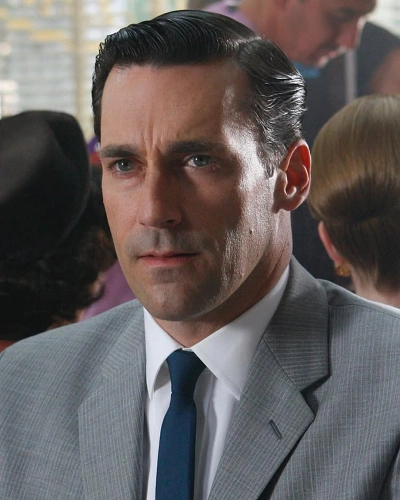
The cornerstone of classic men’s grooming. This haircut is built on clean scissor work and precise sectioning, allowing the part to appear intentional without looking forced. The shape follows the natural fall of the hair, creating elegance through control rather than rigidity. It transitions effortlessly from formal to casual settings.
Best suited for: Classic, professional lifestyles
Face shape: Oval, square, rectangular
Hair type: Straight to slightly wavy
Beard & moustache: Classic moustache, light stubble
2. Refined Slick Back
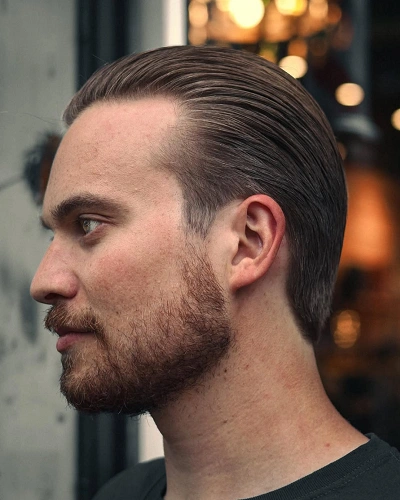
A modern refinement of a vintage icon. Unlike high-shine, tightly pulled slick backs, this version prioritizes flow and softness. The hair is directed back with intention, supported by subtle tapering on the sides. It conveys authority without aggression and polish without excess.
Best suited for: Bold yet refined personalities
Face shape: Oval, diamond, heart
Hair type: Medium to thick density
Beard & moustache: Full beard or moustache
3. Low, Rounded Pompadour
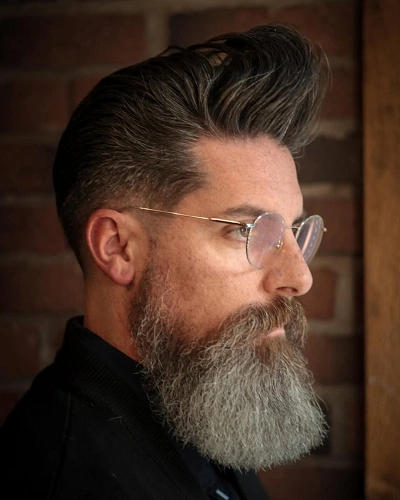
This pompadour emphasizes proportion over height. Volume is controlled and rounded, creating a sculpted silhouette that feels mature and considered. It’s a statement cut that avoids flamboyance, relying instead on balance and structure to make its impression.
Best suited for: Statement without flashiness
Face shape: Round, square
Hair type: Medium density with lift
Beard & moustache: Strong moustache or goatee
4. Natural Waves and Texture
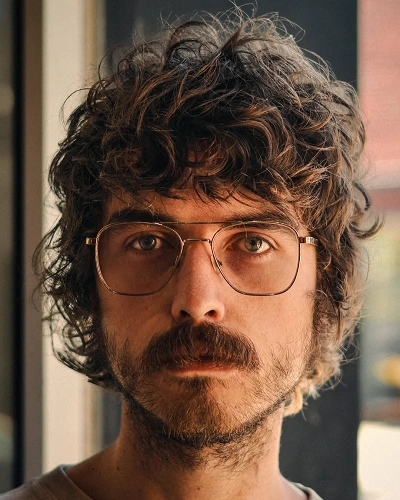
An ode to authenticity. This style enhances natural movement rather than suppressing it, allowing waves and texture to add depth and character. Precision lies in restraint; shaping the hair just enough to feel intentional while preserving its organic flow.
Best suited for: Relaxed, creative lifestyles
Face shape: Oval, round, heart
Hair type: Naturally wavy or textured
Beard & moustache: Natural beard or stubble
5. Classic Tapered Sides and Back
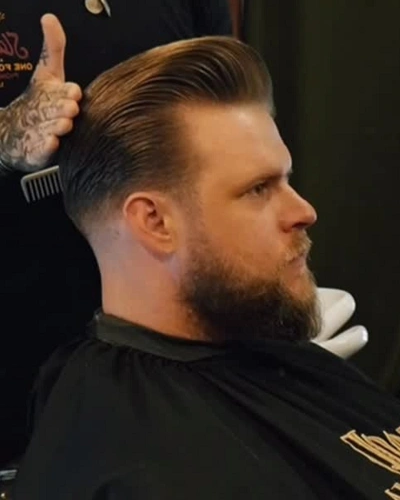
The unsung hero of traditional barbering. This cut relies on gradual transitions and seamless blending, avoiding harsh contrasts. It’s designed to age gracefully, maintaining structure even weeks after the cut. A true testament to craftsmanship.
Best suited for: Timeless everyday grooming
Face shape: All face shapes
Hair type: All hair textures
Beard & moustache: Any well-groomed style
6. Short Back and Sides
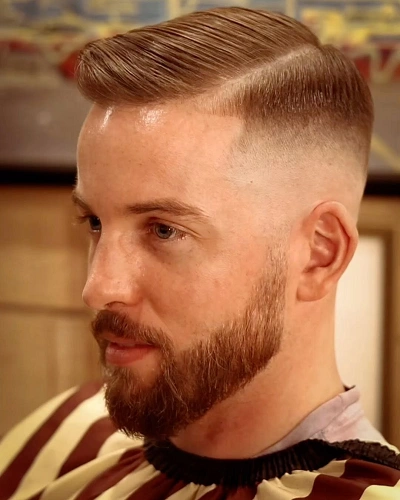
A disciplined, understated classic executed entirely with scissors. This cut offers clean structure without the severity of modern fades, preserving softness and movement. Ideal for men who value subtle refinement over trend-driven sharpness.
Best suited for: Traditional, understated tastes
Face shape: Oval, square
Hair type: Straight to wavy
Beard & moustache: Clean shave or neat moustache
7. Executive Contour Cut
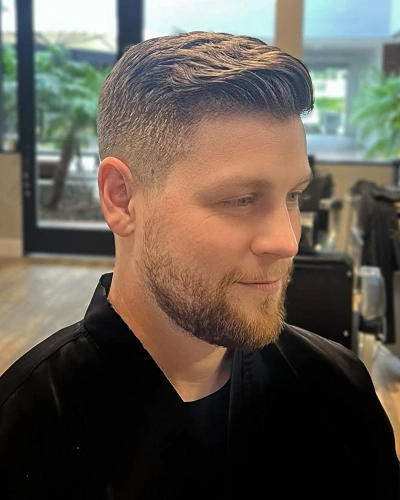
A tailored silhouette shaped closely to the head, emphasizing symmetry and control. The contour cut enhances bone structure while maintaining a conservative profile, making it a staple of 1930s professional grooming.
Best suited for: Formal, leadership roles
Face shape: Oval, rectangular
Hair type: Fine to medium
Beard & moustache: Clean shave or light stubble
8. Side Swept Classic Crop
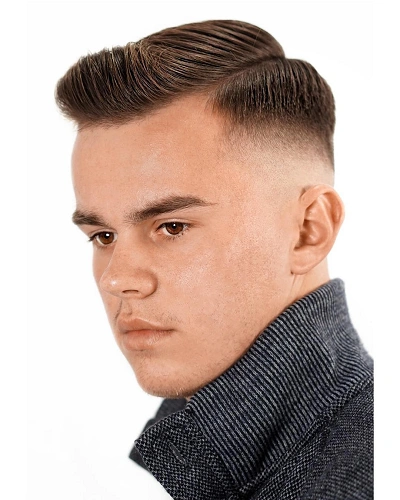
Short, controlled, and directional. This style keeps length minimal while allowing a subtle side sweep for character. It balances practicality with polish, offering a sharp look that remains soft at the edges.
Best suited for: Practical yet style-conscious individuals
Face shape: Square, round
Hair type: Straight to slightly wavy
Beard & moustache: Short beard or stubble
9. Gentleman’s Brush Back
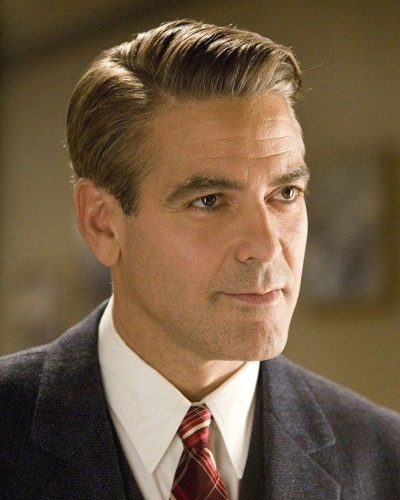
Less rigid than a slick back, more intentional than a natural fall. The brush back relies on texture and controlled volume, creating an easy elegance that feels lived-in rather than styled.
Best suited for: Confident, low-maintenance lifestyles
Face shape: Oval, heart
Hair type: Medium density
Beard & moustache: Full beard or classic moustache
10. Vintage Ivy League Cut
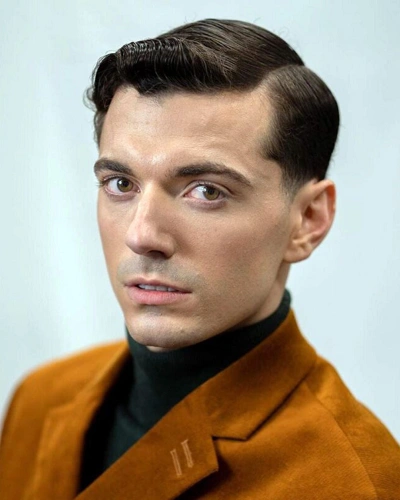
A shorter, collegiate-inspired style with clean lines and soft tapering. It offers structure without severity and embodies quiet confidence. Perfect for men who appreciate heritage grooming with everyday wearability.
Best suited for: Smart-casual lifestyles
Face shape: Oval, square
Hair type: Fine to medium
Beard & moustache: Clean shave or subtle stubble
Technique Over Speed: Lost Art of Barbering
One of the biggest differences between modern haircuts and 1930s barbering lies in technique.
In Japan’s vintage revival:
- Scissors dominate over clippers
- Hair is cut dry and wet, depending on purpose
- Razors are used for precision, not gimmicks
- Pomades are applied sparingly and deliberately
Every step serves a purpose. Nothing is rushed. The barber studies how the hair moves when the client sits, stands, and turns their head.
This approach results in haircuts that don’t just look good in the chair; they hold their shape in real life.
Why This Movement Is Exploding Now?
The modern man is tired of excess. Tired of disposable trends. Tired of haircuts that look great for photos but fall apart in reality.
The revival of 1930s barbering answers a deeper desire:
- To slow down
- To invest in quality
- To project confidence without shouting
- To embrace masculinity that feels grounded and mature
Social media has amplified this movement, showcasing Japanese barbers executing flawless vintage cuts with almost surgical precision. Men across the world are realizing that timeless style always outperforms trends.
Fashion, Grooming, and Identity
Vintage haircuts don’t exist in isolation. They pair naturally with:
- Tailored jackets and coats
- High-waisted trousers
- Leather shoes and boots
- Classic watches and accessories
But more importantly, they influence how a man carries himself. When your haircut is intentional, posture improves. Confidence sharpens. Presence deepens.
This is why the 1930s revival feels so powerful; it’s not about nostalgia. It’s about identity.
How Modern Men Can Embrace the Look?
You don’t need to live in Japan or dress like it’s 1935 to adopt this style. The key is mindset. Choose barbers who value:
- Scissor work
- Natural tapers
- Consultation and face-shape analysis
- Traditional styling products
Maintain your haircut with regular trims and proper grooming habits. Vintage styles reward consistency. Above all, understand that this look isn’t about perfection; it’s about intention.
Final Thoughts
The revival of 1930s barbering in Japan reminds us that true style doesn’t expire. It evolves quietly, waiting for the right moment to return.
In a culture obsessed with speed and novelty, these vintage haircuts stand as a form of rebellion; elegant, restrained, and deeply masculine. They speak to men who value substance over spectacle, craftsmanship over convenience, and confidence over noise.
If you’re searching for a vintage vibe haircut that feels authentic, powerful, and enduring, look no further than the lessons of the 1930s; brought back to life through Japan’s unmatched dedication to craft. Because trends fade. But timeless style always comes back.
What’s Trending!
15 Skullet Haircut for Men Inspired by Rock, Punk and Street Culture.
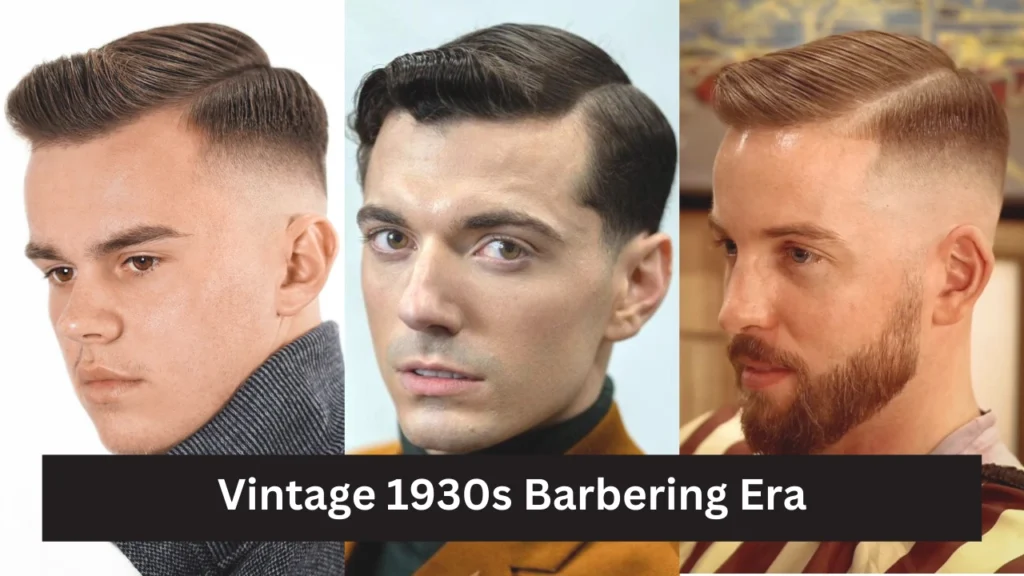
Vintage 1930s Barbering Comes Alive: Ultimate Retro Hair Revival for Modern Men.
15 Haircuts for Semi Curly Hair Male: Celebrity Inspiration 2026.
15 Top Knot Hairstyle Male to Take Your Style to the Next Level in 2026.
20 High Forehead Hairstyles Male That Instantly Balance Your Face.